Buy educationforfuture.eu ?
We are moving the project
educationforfuture.eu .
Are you interested in purchasing the domain
educationforfuture.eu ?
domain@kv-gmbh.de · 0541-91531010
Buy educationforfuture.eu ?
Is cultural globalization diversity or leveling?
Cultural globalization can be seen as both diversity and leveling. On one hand, it has led to the spread and exchange of diverse cultural practices, ideas, and products across the world, leading to a greater appreciation and understanding of different cultures. On the other hand, it has also led to the homogenization and standardization of certain cultural elements, as popular globalized media and consumer products can overshadow local traditions and practices. Ultimately, cultural globalization can result in both diversity and leveling, depending on the context and perspective. **
I am not making progress with the reaction equation.
If you are not making progress with the reaction equation, it might be helpful to review the basic principles of chemical reactions and stoichiometry. Make sure you have correctly identified the reactants and products, balanced the equation, and considered any relevant factors such as temperature, pressure, and catalysts. If you are still struggling, consider seeking help from a teacher, tutor, or online resources to gain a better understanding of the concepts involved in the reaction. Practice working through similar reaction equations to improve your skills and confidence. **
Similar search terms for Equation
Top-Angebote
Products related to Equation:
-
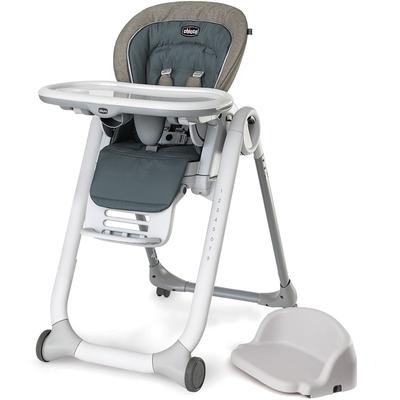
Chicco Polly Progress High Chair - CalypsoIt can even accommodate two children at once: one in the booster, and one in the stool, making mealtimes happier for the whole family!For growing babies, Progress? offers all the convenience of an everyday highchair with a wipeable seat pad,...159,99 $*Shipping: 0,00 $Secure redirect to the provider
-
What is the mesh equation and the node equation?
The mesh equation is a fundamental equation used in circuit analysis to calculate the current flowing in a loop of a circuit. It is based on Kirchhoff's voltage law and states that the sum of the voltage drops around a closed loop in a circuit is equal to the product of the current flowing in the loop and the total resistance of the loop. The node equation, on the other hand, is used to calculate the voltage at a specific node in a circuit. It is based on Kirchhoff's current law and states that the sum of currents entering a node is equal to the sum of currents leaving the node. This equation is used to solve for the voltage at a particular node in a circuit. **
-
'Equation and what?'
Equation and inequality are two fundamental concepts in mathematics. An equation is a statement that two expressions are equal, while an inequality is a statement that two expressions are not equal. Equations are used to find the value of a variable that makes the equation true, while inequalities are used to compare two quantities. Both equations and inequalities are essential tools in solving mathematical problems and modeling real-world situations. **
-
Is a linear equation the same as a parameter equation?
No, a linear equation and a parameter equation are not the same. A linear equation is an equation of the form y = mx + b, where m and b are constants and x and y are variables. A parameter equation, on the other hand, is an equation that contains parameters, which are variables that represent certain values in the equation. Parameter equations can be linear or non-linear, but the presence of parameters distinguishes them from regular linear equations. **
-
How can one reduce this equation to a quadratic equation?
To reduce an equation to a quadratic equation, one can use the method of substitution. By substituting a variable for a certain expression in the equation, one can transform the equation into a quadratic form. Another method is completing the square, which involves rearranging the equation to isolate the quadratic term and then adding or subtracting a constant to complete the square. Additionally, one can use the quadratic formula to solve for the roots of the equation, which can help in reducing the equation to a quadratic form. **
What is the second-order difference equation for an inhomogeneous equation?
The second-order difference equation for an inhomogeneous equation is of the form \(y[n] - a_1y[n-1] - a_2y[n-2] = x[n]\), where \(y[n]\) represents the output sequence, \(x[n]\) represents the input sequence, and \(a_1\) and \(a_2\) are constants. This equation describes how the current output value \(y[n]\) is related to the previous two output values \(y[n-1]\) and \(y[n-2]\), as well as the current input value \(x[n]\). The inhomogeneous term \(x[n]\) represents any external influences or disturbances acting on the system. **
How can a coordinate equation be converted into a normal equation?
A coordinate equation can be converted into a normal equation by rearranging the terms to isolate the dependent variable on one side of the equation. This involves performing algebraic operations such as addition, subtraction, multiplication, and division to simplify the equation. Once the dependent variable is isolated, the equation is in normal form and can be used to solve for the variable in terms of the independent variables. This process allows for a clearer understanding of the relationship between the variables and makes it easier to analyze and interpret the equation. **
Top-Angebote
Products related to Equation:
-
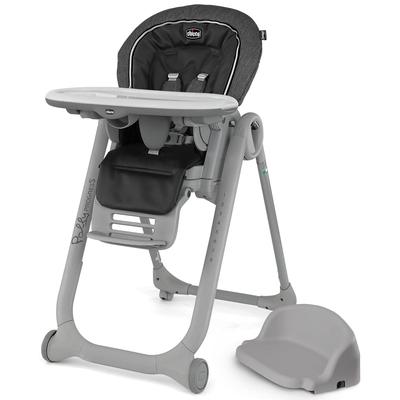
Chicco Polly Progress Highchair - NaturaleIt can even accommodate two children at once: one in the booster, and one in the stool, making mealtimes happier for the whole family!For growing babies, Progress? offers all the convenience of an everyday highchair with a wipeable seat pad,...199,99 $*Shipping: 0,00 $Secure redirect to the provider
-
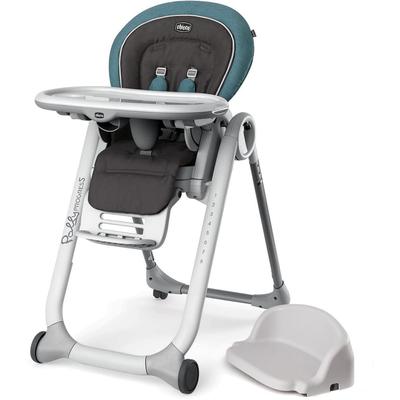
Chicco Polly Progress Highchair - MineraleIt can even accommodate two children at once: one in the booster, and one in the stool, making mealtimes happier for the whole family!For growing babies, Progress? offers all the convenience of an everyday highchair with a wipeable seat pad,...172,49 $*Shipping: 0,00 $Secure redirect to the provider
-
Chicco Polly Progress High Chair - CalypsoIt can even accommodate two children at once: one in the booster, and one in the stool, making mealtimes happier for the whole family!For growing babies, Progress? offers all the convenience of an everyday highchair with a wipeable seat pad,...159,99 $*Shipping: 0,00 $Secure redirect to the provider
-
Is cultural globalization diversity or leveling?
Cultural globalization can be seen as both diversity and leveling. On one hand, it has led to the spread and exchange of diverse cultural practices, ideas, and products across the world, leading to a greater appreciation and understanding of different cultures. On the other hand, it has also led to the homogenization and standardization of certain cultural elements, as popular globalized media and consumer products can overshadow local traditions and practices. Ultimately, cultural globalization can result in both diversity and leveling, depending on the context and perspective. **
-
I am not making progress with the reaction equation.
If you are not making progress with the reaction equation, it might be helpful to review the basic principles of chemical reactions and stoichiometry. Make sure you have correctly identified the reactants and products, balanced the equation, and considered any relevant factors such as temperature, pressure, and catalysts. If you are still struggling, consider seeking help from a teacher, tutor, or online resources to gain a better understanding of the concepts involved in the reaction. Practice working through similar reaction equations to improve your skills and confidence. **
-
What is the mesh equation and the node equation?
The mesh equation is a fundamental equation used in circuit analysis to calculate the current flowing in a loop of a circuit. It is based on Kirchhoff's voltage law and states that the sum of the voltage drops around a closed loop in a circuit is equal to the product of the current flowing in the loop and the total resistance of the loop. The node equation, on the other hand, is used to calculate the voltage at a specific node in a circuit. It is based on Kirchhoff's current law and states that the sum of currents entering a node is equal to the sum of currents leaving the node. This equation is used to solve for the voltage at a particular node in a circuit. **
-
'Equation and what?'
Equation and inequality are two fundamental concepts in mathematics. An equation is a statement that two expressions are equal, while an inequality is a statement that two expressions are not equal. Equations are used to find the value of a variable that makes the equation true, while inequalities are used to compare two quantities. Both equations and inequalities are essential tools in solving mathematical problems and modeling real-world situations. **
Similar search terms for Equation
-
Is a linear equation the same as a parameter equation?
No, a linear equation and a parameter equation are not the same. A linear equation is an equation of the form y = mx + b, where m and b are constants and x and y are variables. A parameter equation, on the other hand, is an equation that contains parameters, which are variables that represent certain values in the equation. Parameter equations can be linear or non-linear, but the presence of parameters distinguishes them from regular linear equations. **
-
How can one reduce this equation to a quadratic equation?
To reduce an equation to a quadratic equation, one can use the method of substitution. By substituting a variable for a certain expression in the equation, one can transform the equation into a quadratic form. Another method is completing the square, which involves rearranging the equation to isolate the quadratic term and then adding or subtracting a constant to complete the square. Additionally, one can use the quadratic formula to solve for the roots of the equation, which can help in reducing the equation to a quadratic form. **
-
What is the second-order difference equation for an inhomogeneous equation?
The second-order difference equation for an inhomogeneous equation is of the form \(y[n] - a_1y[n-1] - a_2y[n-2] = x[n]\), where \(y[n]\) represents the output sequence, \(x[n]\) represents the input sequence, and \(a_1\) and \(a_2\) are constants. This equation describes how the current output value \(y[n]\) is related to the previous two output values \(y[n-1]\) and \(y[n-2]\), as well as the current input value \(x[n]\). The inhomogeneous term \(x[n]\) represents any external influences or disturbances acting on the system. **
-
How can a coordinate equation be converted into a normal equation?
A coordinate equation can be converted into a normal equation by rearranging the terms to isolate the dependent variable on one side of the equation. This involves performing algebraic operations such as addition, subtraction, multiplication, and division to simplify the equation. Once the dependent variable is isolated, the equation is in normal form and can be used to solve for the variable in terms of the independent variables. This process allows for a clearer understanding of the relationship between the variables and makes it easier to analyze and interpret the equation. **
* All prices are inclusive of VAT and, if applicable, plus shipping costs. The offer information is based on the details provided by the respective shop and is updated through automated processes. Real-time updates do not occur, so deviations can occur in individual cases. ** Note: Parts of this content were created by AI.