Buy educationforfuture.eu ?
We are moving the project
educationforfuture.eu .
Are you interested in purchasing the domain
educationforfuture.eu ?
domain@kv-gmbh.de · 0541-91531010
Buy educationforfuture.eu ?
What are proportion problems?
Proportion problems involve comparing two ratios or fractions to determine if they are equal. These problems often involve finding an unknown quantity in a given proportion. Proportion problems can be solved using cross multiplication or by setting up equivalent fractions. They are commonly used in various real-life situations such as cooking, finance, and geometry. **
What are proportion equations?
Proportion equations are mathematical expressions that show the equality of two ratios. They are used to compare the relationship between two sets of numbers or quantities. In a proportion equation, the cross products of the ratios are equal, meaning that the product of the first term in one ratio and the second term in the other ratio is equal to the product of the second term in the first ratio and the first term in the second ratio. Proportion equations are commonly used in various real-life situations, such as in cooking recipes, financial calculations, and solving problems involving similar figures. **


Similar search terms for Proportion
Top-Angebote
Products related to Proportion:
-
Chicco Polly Progress Relax High Chair - SilhouetteThe Polly Progress is a multichair with five unique configurations for every age and stage: Newborn Recliner, Infant Highchair, Toddler Booster, Big Kid Booster, and Youth Stool. It can even accommodate two children at once one in the booster, and...229,99 $*Shipping: 0,00 $Secure redirect to the provider



-
Is my proportion correct?
To determine if your proportion is correct, you should compare it to a known or expected value. If your proportion matches the expected value or falls within an acceptable range, then it is likely correct. You can also use statistical tests to assess the significance of your proportion. Additionally, double-check your calculations and ensure that your sample size is appropriate for making accurate inferences. **
-
What is an inverse proportion function?
An inverse proportion function is a mathematical relationship between two variables where one variable increases as the other variable decreases, and vice versa. In an inverse proportion function, as one variable doubles, the other variable is halved, and so on. This relationship is typically represented by the equation y = k/x, where y is one variable, x is the other variable, and k is a constant. **
-
How do you calculate a proportion?
To calculate a proportion, you need to first determine the total number of items or individuals in the group you are interested in. Then, identify the specific subset of items or individuals that you are focusing on. Finally, divide the number of items in the subset by the total number of items in the group and multiply the result by 100 to get the proportion as a percentage. This will give you a numerical representation of the relationship between the subset and the total group. **
-
Is my three-part proportion correct?
To determine if your three-part proportion is correct, you should first ensure that the corresponding terms are correctly aligned. Then, you can cross-multiply to check if the equation holds true. If the cross-products are equal, then your three-part proportion is correct. Additionally, you can also solve for the missing term to verify if it satisfies the proportion. **

Can you solve the task using a compound proportion? I can only handle the simple proportion.
Yes, the task can be solved using a compound proportion. In a compound proportion, there are multiple ratios involved, making it suitable for situations where there are more than two quantities being compared. However, if you are more comfortable with simple proportions, you can still solve the task by breaking it down into smaller steps and using multiple simple proportions to find the solution. **
Is cultural globalization diversity or leveling?
Cultural globalization can be seen as both diversity and leveling. On one hand, it has led to the spread and exchange of diverse cultural practices, ideas, and products across the world, leading to a greater appreciation and understanding of different cultures. On the other hand, it has also led to the homogenization and standardization of certain cultural elements, as popular globalized media and consumer products can overshadow local traditions and practices. Ultimately, cultural globalization can result in both diversity and leveling, depending on the context and perspective. **
Top-Angebote
Products related to Proportion:
-
Chicco Polly Progress Highchair - NaturaleIt can even accommodate two children at once: one in the booster, and one in the stool, making mealtimes happier for the whole family!For growing babies, Progress? offers all the convenience of an everyday highchair with a wipeable seat pad,...199,99 $*Shipping: 0,00 $Secure redirect to the provider
-
Sesderma Reti Age 5 Liposomal Serum Anti-Aging Innovation 30mLA facial serum for wrinkles and signs of ageing. Reduces wrinkles and fine lines. Hydrates and strengthens barrier. Restores youthful radiance. 5-Retinoid System: smooths wrinkles, accelerates renewal, and boosts collagen. Biomimetic Peptides: fill expression lines by stimulating collagen synthesis.54,51 £*Shipping: 5,34 £Secure redirect to the provider
-
Chicco Polly Progress Relax High Chair - SilhouetteThe Polly Progress is a multichair with five unique configurations for every age and stage: Newborn Recliner, Infant Highchair, Toddler Booster, Big Kid Booster, and Youth Stool. It can even accommodate two children at once one in the booster, and...229,99 $*Shipping: 0,00 $Secure redirect to the provider
-
What are proportion problems?
Proportion problems involve comparing two ratios or fractions to determine if they are equal. These problems often involve finding an unknown quantity in a given proportion. Proportion problems can be solved using cross multiplication or by setting up equivalent fractions. They are commonly used in various real-life situations such as cooking, finance, and geometry. **
-
What are proportion equations?
Proportion equations are mathematical expressions that show the equality of two ratios. They are used to compare the relationship between two sets of numbers or quantities. In a proportion equation, the cross products of the ratios are equal, meaning that the product of the first term in one ratio and the second term in the other ratio is equal to the product of the second term in the first ratio and the first term in the second ratio. Proportion equations are commonly used in various real-life situations, such as in cooking recipes, financial calculations, and solving problems involving similar figures. **
-
Is my proportion correct?
To determine if your proportion is correct, you should compare it to a known or expected value. If your proportion matches the expected value or falls within an acceptable range, then it is likely correct. You can also use statistical tests to assess the significance of your proportion. Additionally, double-check your calculations and ensure that your sample size is appropriate for making accurate inferences. **
-
What is an inverse proportion function?
An inverse proportion function is a mathematical relationship between two variables where one variable increases as the other variable decreases, and vice versa. In an inverse proportion function, as one variable doubles, the other variable is halved, and so on. This relationship is typically represented by the equation y = k/x, where y is one variable, x is the other variable, and k is a constant. **
Similar search terms for Proportion
-
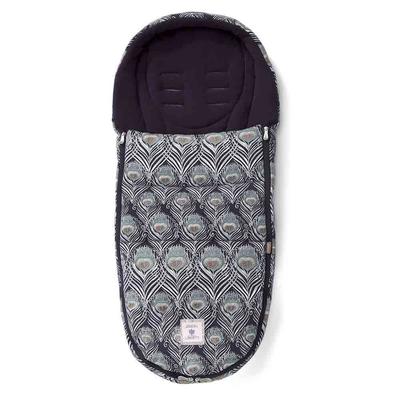
Mamas & Papas Special Edition Liberty Collaboration Cold Weather Plus FootmuffThe Cold Weather Plus Footmuff by Mamas & Papas is the ultimate footmuff for cold weather protection, and features an extra-soft fleece lining. Ideal for keeping baby warm and cozy when out and about in cool weather, you can even zip down to a liner...150,00 $*Shipping: 0,00 $Secure redirect to the provider
-
Yealink MeetingBoard 65-inch 4K Interactive Collaboration Display (MB65-A001)Yealink MeetingBoard 65 (MB65-A001): a 65-inch 4K Ultra HD LED-backlit interactive touch display for meeting rooms, with built-in camera, microphone array and speakers for Microsoft Teams Rooms and Zoom Rooms. Runs Android with a built-in processor and Wi-Fi.3896,99 £*Shipping: 0,00 £Secure redirect to the provider
-
How do you calculate a proportion?
To calculate a proportion, you need to first determine the total number of items or individuals in the group you are interested in. Then, identify the specific subset of items or individuals that you are focusing on. Finally, divide the number of items in the subset by the total number of items in the group and multiply the result by 100 to get the proportion as a percentage. This will give you a numerical representation of the relationship between the subset and the total group. **
-
Is my three-part proportion correct?
To determine if your three-part proportion is correct, you should first ensure that the corresponding terms are correctly aligned. Then, you can cross-multiply to check if the equation holds true. If the cross-products are equal, then your three-part proportion is correct. Additionally, you can also solve for the missing term to verify if it satisfies the proportion. **
-
Can you solve the task using a compound proportion? I can only handle the simple proportion.
Yes, the task can be solved using a compound proportion. In a compound proportion, there are multiple ratios involved, making it suitable for situations where there are more than two quantities being compared. However, if you are more comfortable with simple proportions, you can still solve the task by breaking it down into smaller steps and using multiple simple proportions to find the solution. **
-
Is cultural globalization diversity or leveling?
Cultural globalization can be seen as both diversity and leveling. On one hand, it has led to the spread and exchange of diverse cultural practices, ideas, and products across the world, leading to a greater appreciation and understanding of different cultures. On the other hand, it has also led to the homogenization and standardization of certain cultural elements, as popular globalized media and consumer products can overshadow local traditions and practices. Ultimately, cultural globalization can result in both diversity and leveling, depending on the context and perspective. **
* All prices are inclusive of VAT and, if applicable, plus shipping costs. The offer information is based on the details provided by the respective shop and is updated through automated processes. Real-time updates do not occur, so deviations can occur in individual cases. ** Note: Parts of this content were created by AI.